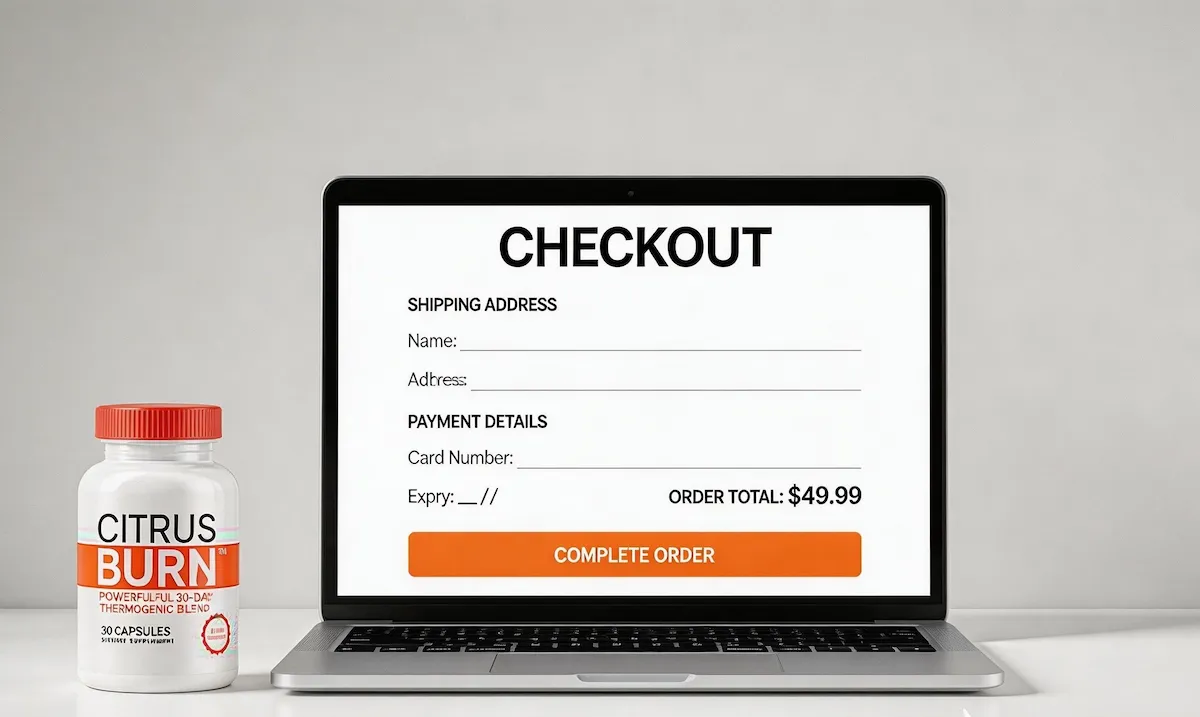
- Official website should mean a clear and consistent checkout route, not just a convincing label.
- Official discount usually refers to the visible bundle pricing structure, not a separate hidden code.
- Third-party promo pages may use official-sounding wording without adding real clarity.
- Most official-website searches are really attempts to verify the safest and clearest offer path.
- Official-sounding pages can still be confusing if the checkout logic or terms are unclear.
- Bundle structure and visible totals matter more than labels alone.
- When in doubt, verify the current official price and checkout terms directly.
- Clarity matters more than labels when comparing “official” offers.
What people usually mean when they search for the Citrus Burn official website discount
How to identify the real Citrus Burn official website route
Instead of relying on labels like “official”, a more reliable approach is to evaluate whether the page behaves like a real offer route.
1. Clear bundle structure
A real official route usually shows how pricing changes depending on quantity — not just a single vague “discount” claim.
2. Visible checkout logic
Before entering payment details, the total price, product quantity, and basic terms should already be visible and understandable.
3. Support and policy visibility
Legitimate offer routes tend to make refund policies, contact details, and basic support information accessible.
Most people are not simply looking for a homepage. They are trying to confirm that they are seeing the real offer, that the discount matches the genuine checkout route, and that they are not wasting time on recycled pages built around “official” language.
In practice, “official website discount” usually means: show me the real current offer, make the checkout clear, and let me compare it calmly.
Why “official website” pages can still create confusion
Official-sounding pages often bundle several things together: trust language, promo language, redirect behavior, and price messaging. That can make a page feel more authoritative than it actually is.
What usually causes the confusion
- Some pages use official-sounding wording without clearly explaining the offer structure.
- Some pages focus on urgency before they explain totals or terms.
- Some pages redirect so quickly that users never really understand what they are seeing.
What matters more than the word “official” in practice
The word “official” only matters if the page actually behaves like a reliable offer route. If pricing, checkout logic, or terms are unclear, the label itself has little value.
That is why verification matters more than branding language alone.
How the Citrus Burn official website discount usually works in practice
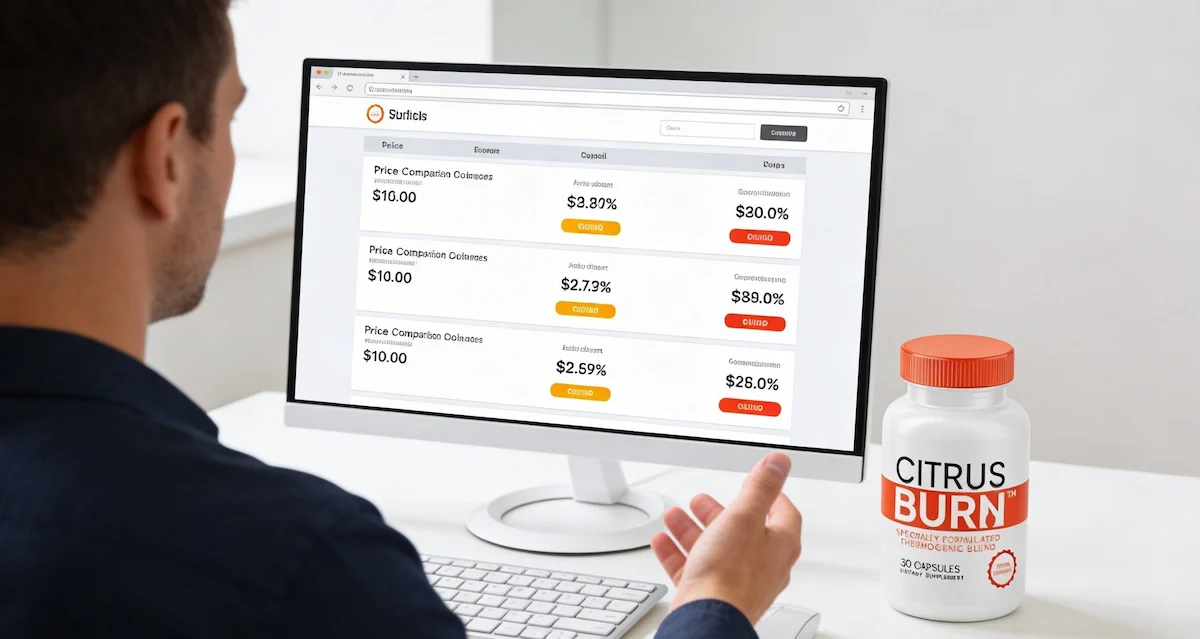
In most cases, the “official website discount” is better understood as the bundle pricing structure shown on the primary checkout route. That means the important question is whether the visible totals and offer logic are consistent — not whether the page uses the word “official.”
What to pay attention to
- Whether the offer changes clearly by bundle size
- Whether the final checkout total is visible before payment
- Whether refund and support information are readable and current
How to think about official-website claims
Instead of assuming every “official” page is automatically the right one, it helps to separate page types by usefulness.
1. Clear verification pages
These help users confirm current price, bundle options, and checkout logic without forcing urgency first.
2. Over-branded offer pages
These may look polished and still tell the user very little about totals, policy, or structure.
3. Redirect-heavy “official” pages
These often rely on branding language while skipping the explanation users are actually searching for.
4. Clean decision pages
These explain what the official route means in practical terms and help users verify the offer calmly.
What “official website” marketing often gets wrong
- It over-relies on labels: “official” is useful only if the page is actually clear.
- It hides comparison logic: users want to know how the offer works, not just what it is called.
- It assumes trust follows design: a polished layout is not the same as transparent pricing.
- It rewards urgency: when what the user really needs is verification.
Practical framing: what a careful buyer should do
A careful buyer does not need to guess which page is “most official.” They need enough clarity to verify whether the current offer is coherent, transparent, and consistent with the main pricing structure.
That means checking whether the offer logic makes sense, whether the checkout is readable, and whether support and refund information are visible before payment.
- Compare price structure instead of trusting branding language alone
- Prioritize readable terms over visual polish
- Use verification pages that reduce confusion, not increase it
How to read Citrus Burn official-website claims more intelligently
- Ask whether the page explains the pricing logic clearly
- Ask whether the offer looks consistent with visible bundle pricing
- Ask whether checkout terms are visible before payment
- Ask whether the same structure can be confirmed through the main pricing page
Related reading
These pages help answer the next questions people usually have after searching for official website offers, discounts, and checkout verification.
References
This page is primarily about verification logic, not about outcome promises. For broader consumer and supplement context, start with stable reference hubs.
FAQ
What does the Citrus Burn official website discount usually mean?
Usually it refers to the current bundle pricing and checkout structure shown on the main route, not necessarily a separate hidden promo code.
How should I verify the real official offer?
Compare the visible price, bundle structure, checkout terms, and support information directly rather than relying only on pages that use official-sounding language.
Does “official website” always mean best deal?
Not automatically. What matters is whether the pricing, terms, and checkout logic are clear and consistent.
Why do multiple pages claim to be official?
Because official-sounding language attracts search traffic. That is why verification matters more than labels alone.
Is this page medical advice?
No. LukeZen Research publishes educational content only. Nothing on this page is medical advice, diagnosis, or treatment.
Editorial standards
LukeZen Research pages follow a strict neutrality standard: educational tone, no diagnostic claims, no guaranteed outcomes, and transparency-first linking. Learn more on: About, Privacy, and Terms.
Update log
- Mar 26, 2026: Initial publication. Added official-website verification framing, linked discount cluster, and built FAQ around official-offer search intent.